
Let’s be real, we all love a good fudgy brownie. But if your baking trays are only seeing action when a chocolate craving hits, you’re missing out on a world of vibrant colors, aromatic spices, and “melt-in-your-mouth” textures.
As someone who spends their day looking at search intent and keywords, I’ve noticed a massive shift. People aren’t just looking for “Indian dessert recipes” anymore; they are looking for accessible fusion. They want the nostalgic flavors of a Delhi sweet shop or a Mumbai street corner, but without the three-hour commitment of standing over a boiling pot of milk.
The Baking Tray Method.
Traditionally, many Indian sweets (mithai) require “bhuna”—the patient process of stirring ingredients in a heavy-bottomed pan until they thicken. But guess what? A conventional oven, along with a standard 9×9 baking tin, can beautifully replicate the even heat required for this process.
Grab your apron. We’re going beyond the brownie and diving into five iconic Indian sweets you can master right in your oven.
1. The “Magic” Milk Cake (Alwar Ka Mawa)
If a cheesecake and a caramel blondie had a baby, it would be the Indian Milk Cake. Historically, this is made by reducing milk for hours until it curdles and caramelizes. In a baking tray? We use a brilliant shortcut.
Why it works in a tray:
The tray provides the perfect depth for that signature two-tone look, darker brown in the center and lighter on the edges.
The Cheat Code: Use high-quality ricotta cheese and sweetened condensed milk.
The Method: Mix ricotta, condensed milk, and a pinch of cardamom. Spread it in your lined baking tray and bake at 350°F (175°C) until the edges are golden and the center is set but slightly wobbling.
The Pro Tip: Once baked, wrap the tray in a thick towel. This keeps the internal heat trapped, allowing the center to continue caramelizing into that deep brown hue we all love.
2. Baked Besan Barfi (Gram Flour Fudge)
Besan Barfi is the ultimate comfort food. Traditionally, you’d roast gram flour in copious amounts of ghee until your arms ache.
The Oven Flip:
You can actually “toast” your besan (gram flour) in the oven first! Spread the flour on your baking tray and bake for 10-12 minutes, stirring occasionally, until it smells nutty.
The Build: Once toasted, whisk in melted ghee, powdered sugar, and a dash of nutmeg.
The Setting: Press the mixture firmly into the tray. Since the mixture is already warm, it will settle into a perfect shape.
3. Baked Gujiya (The Hand-Pie Revolution)
Gujiyas are crescent-shaped dumplings filled with sweetened khoya (milk solids) and nuts, traditionally deep-fried during the Holi festival. However, we must admit that deep-frying can be messy.
Why the Tray Is Better:
By lining them up on a baking sheet, you get a consistent crunch without the grease.
The Dough: Use a standard pie crust or a traditional flour-and-ghee dough.
The Filling: A mix of desiccated coconut, chopped almonds, pistachios, and jaggery.
The Bake: Brush them with a little melted ghee before sliding them into the oven. They come out golden, flaky, and—dare I say—better than the fried version.
4. Coconut Ice (Nariyal Barfi)
This dish is perhaps the easiest entry point for a beginner. It’s vibrant, tropical, and looks stunning in photos (hello, Instagrammable food!).
The Baking Tray Advantage:
Nariyal Barfi needs to be pressed thin to get that delicate “snap.” A rectangular baking tray acts as the perfect mold.
The Mix: Shredded coconut, condensed milk, and rose water.
The Look: Many people do a “double decker” look. Press half the white mixture into the tray, tint the other half with a drop of pink food coloring (or beetroot juice), and layer it on top.
The Finish: Top with dried rose petals and silver leaf (vark) for that authentic royal feel.
5. Kalakand (The Indian Milk Fudge)
Kalakand is known for its grainy, moist texture. It’s usually quite delicate, making it hard to transport. However, when set in a baking tray, it gains the structural integrity it needs to be sliced into perfect squares.
The Modern Twist:
The Base: Use paneer (Indian cottage cheese) crumbled finely.
The Flavor: Saffron is the star here. Soak a few strands in warm milk and swirl it through the mixture before baking.
The Result: A soft, cardamom-scented fudge that feels like a luxury treat but took you 30 minutes to prep.
A Quick Comparison: Traditional vs. Baking Tray
| Feature | Traditional Method | Baking Tray Method |
| Effort | High (constant stirring) | Low (set and forget) |
| Cleanup | Multiple pots/pans | One tray, one bowl |
| Texture | Soft/Varied | Uniform & easy to slice |
| Health | Often deep-fried | Mostly baked/roasted |
The beauty of Indian sweets lies in their soul, the cardamom, the nuts, and the slow-cooked dairy. You don’t lose that soul by using a modern appliance; you just make it more accessible. Whether you’re preparing for a Diwali celebration or simply seeking an alternative to a box mix, these tray-based treats serve as an invaluable tool.
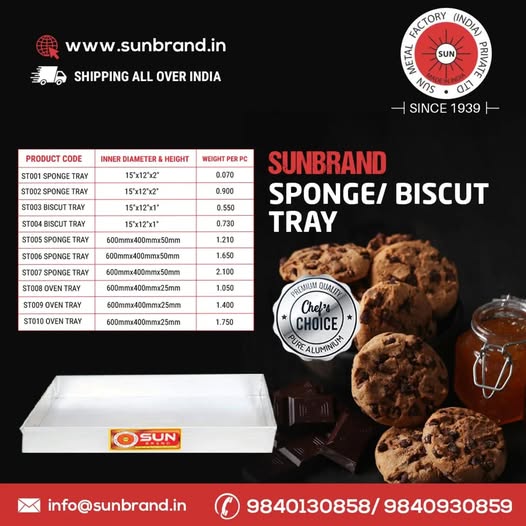
Click to to buy a Baking tray