
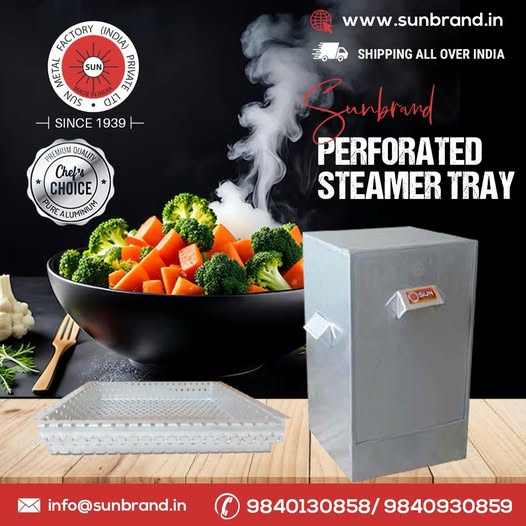
Healthy cooking isn’t about complicated recipes or long hours in the kitchen. You don’t have to give up the foods you love. Sometimes, the simplest change is the cooking method you use. A Perforated Steaming Tray can make everyday steaming easier while helping you prepare vegetables, idlis, dumplings, fish, and other foods with little or no added oil. With steam circulating through strategically placed holes, food can cook gently without sitting directly in water. Sunbrand’s steaming range is designed around this simple principle, making steaming a practical option for modern kitchens.
Steaming is an ancient part of Indian and Asian cooking traditions, but it is especially suited to the health-conscious lifestyle of today. Whether you are trying to reduce unnecessary oil, preserve the natural taste of ingredients, or make meal preparation more convenient, the right steaming equipment can make a noticeable difference.
So what’s the point of this method of cooking? Here are seven practical reasons to give it a place in your kitchen.
1. A perforated steaming tray lets you cook with less oil
Using less oil while cooking is one of the easiest ways to lighten your daily meals.
Steaming differs from frying or sautéing by not requiring the food to be covered in oil. The food cooks through hot steam, allowing you to prepare everything from vegetables and dumplings to fish and certain snacks without relying on large quantities of cooking fat.
That said, not every dish you steam has to be 100% oil-free. You can still add a small amount of oil, ghee, herbs, spices, or seasoning after cooking when a recipe calls for it.
If you want to understand more about how steam cooking can support healthier meal preparation, explore Sunbrand’s guide to the health benefits of steaming.
2. It Allows the Food to Steam Through
The most important feature of a perforated tray are holes. They allow steam from the water below to move upward and circulate around the ingredients.
The food sits above the boiling water and is cooked by the steam, not by being put directly into the boiling water. This can help maintain the texture of ingredients and prevent them from becoming waterlogged.
For practical tips on setting up and using this type of cookware, read Sunbrand’s guide to using a perforated steaming tray. This is especially handy when you are steaming foods that tend to get soggy from too much water. Dumplings, vegetables, idlis and other steamed preparations can benefit from controlled steam circulation.
3. Steaming Can Help Preserve the Natural Flavour of Ingredients
When food is heavily fried or covered with rich sauces, the cooking method and added ingredients can dominate its natural flavour.
Steaming takes a different approach.
Because ingredients are cooked gently with steam, their natural flavours can remain prominent. Fresh vegetables can retain their characteristic taste and colour, while fish, dumplings and other delicate foods can remain moist when cooked correctly.
This also gives you more flexibility when seasoning. Instead of relying heavily on oil-based sauces, you can experiment with ingredients such as:
- Lemon and herbs
- Garlic and ginger
- Black pepper
- Chilli flakes
- Curry leaves
- Coriander
- Sesame
- Light spice blends
The result can be simple food that still feels flavourful and satisfying.
4. It Works for Much More Than Vegetables
One common misconception about steaming is that it is only useful for vegetables.
In reality, steaming can be surprisingly versatile.
A good steaming setup can be used for:
- Idlis
- Momos and dumplings
- Dhokla
- Kozhukattai
- Steamed vegetables
- Fish
- Chicken
- Eggs
- Certain rice and grain preparations
- Steamed snacks and desserts
If you are looking for more inspiration beyond vegetables, take a look at Sunbrand’s collection of kozhukattai recipes that explore different ways to use steam cooking
For example, if you enjoy South Indian cooking, steaming can go well beyond traditional idlis. You can experiment with different varieties of kozhukattai, including sweet, savoury, millet-based and vegetable-filled versions. Sunbrand’s recent kozhukattai guide includes ten variations that can be prepared using its steaming setup.
That versatility makes steaming equipment useful rather than something that spends most of the year sitting inside a kitchen cabinet.
5. It Can Make Healthy Meal Preparation More Convenient
Healthy eating often sounds easier in theory than it feels on a busy weekday.
After work, school runs, household responsibilities and everything else on the schedule, spending a long time preparing elaborate meals may not be realistic.
Steaming can simplify part of that process.
Once the water is heated, you can arrange your ingredients on the tray, cover the vessel and allow the steam to cook the food. With appropriate preparation and cooking times, several ingredients can be prepared with relatively little active attention.
The perforated design is particularly useful because you do not have to constantly stir food as you might with certain stovetop cooking methods.
And because steaming can be used for multiple types of food, the same basic setup can become part of your regular meal-preparation routine.
6. Stainless Steel Makes It Suitable for Regular Kitchen Use
For cookware and kitchen accessories used frequently, material matters.
Sunbrand states that its steaming tray is made from food-grade stainless steel and is designed for repeated use. The company also highlights its resistance to rust and heat, along with its focus on durability.
For everyday cooking, a durable tray can be more practical than repeatedly replacing thinner or less robust alternatives.
Stainless steel is also familiar to Indian kitchens, where cookware often needs to withstand frequent washing, high temperatures and regular use.
As with any cookware, proper care matters. Cleaning the tray after use, removing food residue and drying it thoroughly before storage can help maintain its condition.
If you are using a dishwasher, always check the specific care instructions supplied with the product before doing so.
7. It Encourages a Simpler Approach to Healthy Cooking
Perhaps the biggest advantage is not one particular feature. It is how steaming can change the way you approach everyday meals.
Healthy cooking does not always require expensive appliances or complicated meal plans. Sometimes, it starts with choosing a cooking method that makes nutritious ingredients easier to prepare.
A plate of steamed vegetables can become a side dish. Steamed fish can become a protein-rich main course. Idlis can form part of breakfast. Dumplings can become a snack. Kozhukattai can turn into a traditional treat with a lighter cooking method.
For more ideas on making the most of steamed vegetables, explore Sunbrand’s guide to using a perforated steaming tray for vegetables
How to Get Better Results When Steaming
Having the right equipment is only part of getting good results. A few simple habits can make steaming more effective.
Don’t overcrowd the tray. Leave enough space between pieces so steam can move around the food.
Cut vegetables into similar sizes. This helps them cook more evenly.
Keep the lid closed. Frequently lifting the lid allows heat and steam to escape and can increase cooking time.
Use appropriate cooking times. Delicate vegetables require less time than dense vegetables or proteins.
Season thoughtfully. Herbs, spices, lemon, ginger and garlic can add plenty of flavour without relying heavily on oil.
Clean after use. Rinsing the tray soon after cooking makes residue easier to remove.
For delicate foods such as kozhukattai and dumplings, spacing is especially important because sufficient room allows steam to circulate around each piece.
Steaming for Traditional and Modern Kitchens
One of the interesting things about steaming is that it connects traditional cooking with modern healthy-eating habits.
Idli, kozhukattai and dhokla have long been prepared using steam. At the same time, modern kitchens are increasingly looking for cooking techniques that can reduce unnecessary oil and simplify food preparation.
The equipment used may evolve, but the basic principle remains remarkably simple: heat water, create steam and allow that steam to cook the food.
For restaurants, caterers and other high-volume kitchens, the same principle can also support consistency and batch preparation. Sunbrand’s recent content on commercial steaming equipment highlights the importance of capacity, consistent cooking and equipment that can withstand demanding kitchen environments.
Is Steaming Right for Your Kitchen?
If your goal is to introduce more vegetables, lighter snacks, steamed breakfasts or simple protein dishes into your routine, steaming is worth exploring.
You don’t need to completely change the way you cook. Start with one or two meals a week. Try steaming vegetables instead of boiling them, prepare dumplings without deep frying, or experiment with different varieties of idli and kozhukattai.
Over time, you may find that steaming becomes one of those kitchen habits that saves effort rather than adding another chore.
Final Thoughts
Healthy cooking does not have to be complicated. A simple shift in technique can make everyday meals lighter, more convenient and more varied.
A Perforated Steaming Tray provides a practical way to harness steam while keeping food elevated above boiling water. Its versatility means you can use it for vegetables, traditional Indian foods, dumplings, proteins and more.
If you are looking for an easy way to introduce more steamed dishes into your cooking routine, it could be a small kitchen upgrade with plenty of everyday possibilities.
The key is to keep it simple: choose fresh ingredients, allow steam to circulate, avoid overcrowding and let the cooking method do the work.
After all, healthy cooking is not about making every meal complicated. It is about making better choices easier to repeat.