
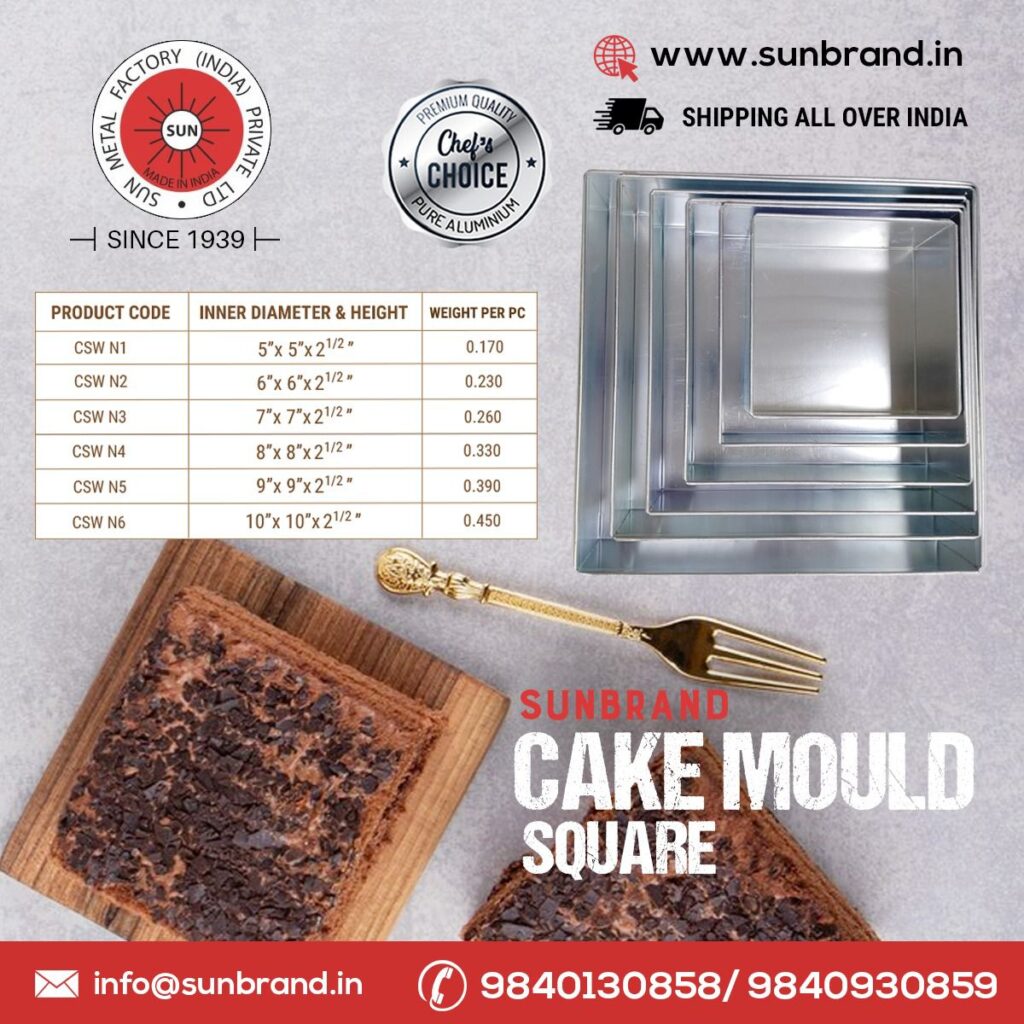
When you buy a Sunbrand Square Cake Mould, we don’t expect you to only pull it out for birthday parties. As the manufacturers who design and manufacture these pans from heavy-gauge, food-grade aluminum, we built them to be used every day.
Still, we know many bakers hesitate to use a square cake pan for anything else. You might worry that bread dough is too heavy for it, or that your brownies will end up with hard, burnt corners while the center stays gooey.
We want to fix those issues. Below is a breakdown of why these problems happen in a square aluminum pan, along with the exact, practical fixes we use in our own test kitchens to get perfect brownies and breads every time.
The Science of Your Pan: Why Material Matters
To fix baking mistakes, you have to understand how your pan handles heat. We use high-quality aluminum because it is an excellent heat conductor. Unlike glass or dark steel, aluminum heats up quickly and evenly, and it cools down the moment it leaves the oven, stopping your food from overcooking on the counter.
The Problem: Burnt Corners and a Raw Center
A common complaint about square pans is that the outer corners cook much faster than the middle. By the time the center is done, the edges are dry and hard.
- The Cause: In a square pan, heat hits the food from four flat sides at once, meaning the corners absorb energy twice as fast as the rest of the pan.
- The Manufacturer’s Fix: We designed our Sunbrand moulds with a specific wall thickness and slightly rounded corners to help soften this heat concentration. To balance it further, drop your oven temperature by 10°C from whatever the recipe specifies (e.g., if it asks for 180°C, bake at 170°C). This gives the heat enough time to reach the center before the corners dry out. If you want extremely fudgy brownies with zero crust, set your square mould inside a larger baking tray filled with 1 cm of warm water to regulate the base temperature.
Baking Better Brownies
Brownies are heavy in fat and sugar but low on flour, which means they need steady heat to bake correctly without turning into bricks.
The Problem: Brownies Sticking and Tearing
Trying to cut or lift brownies only to have the bottom half stick to the pan is incredibly frustrating.
- The Cause: Aluminum has tiny, microscopic pores. When sugar melts during baking, it runs into these pores and acts like glue as it cools down.
- The Manufacturer’s Fix (The Sling Method):
- Grease the inside of your Sunbrand mould with a thin layer of softened butter or vegetable oil, making sure to get right into the bottom seams.
- Cut a strip of parchment paper that matches the exact width of the bottom of your pan. Lay it inside so the ends hang over two opposite sides like handles.
- Lightly grease the top of the paper.
Once baked, let the brownies cool completely in the pan for 20 minutes. Then, simply grab the paper handles and lift the whole block out cleanly onto a cutting board before slicing.
Making Bread in a Square Mould
Square pans are excellent for soft pull-apart dinner rolls, Japanese milk bread, and focaccia.
The Problem: Dough Overflowing or Collapsing
Sometimes bread dough rises unevenly, spills over the edges, or loses its structure entirely mid-bake.
- The Cause: Yeast dough exerts a lot of outward pressure as it grows, and if the pan is overloaded, it will spill or collapse.
- The Manufacturer’s Fix: Our straight-sided walls are reinforced to handle this pressure, but you need to budget your dough correctly. For our standard 8×8 inch or 9×9 inch moulds, keep your total dough weight between 450g and 550g. For perfect rolls, shape your dough into 9 or 16 equal balls and arrange them in a grid. Let them rise until they just touch each other and fill out the square corners before putting them in the oven. This forces the dough to rise straight up, creating tall, soft sides.
The Problem: Pale, Wet Bottom Crusts
Your bread looks beautiful and brown on top, but the bottom and sides come out pale, soft, and damp.
- The Cause: Steam gets trapped between the hot dough and the metal surface as the bread cools.
- The Manufacturer’s Fix: Take the bread out of the pan the absolute minute it finishes baking (when the top is golden and the internal temperature hits 93°C). Turn it out immediately onto a wire cooling rack. If you leave it to cool inside the aluminum pan, the evaporating steam will turn your crisp crust completely soggy.
Cleaning and Care: Making It Last a Lifetime
Our pans do not use chemical non-stick coatings like Teflon because those scratch, wear off over time, and cannot handle high heat safely. Pure aluminum will last for decades if you clean it properly.
The Problem: Dark Stains, Discoloration, and Warping
Pans turning grey or black after washing, or twisting out of shape over time.
- The Fix for Stains: Never put aluminum bakeware in the dishwasher. Dishwasher detergents are highly alkaline and will chemically react with the aluminum, instantly oxidizing the surface and turning it a dark, chalky grey. Always hand wash with standard dish soap, warm water, and a soft sponge. If you have burnt sugar or grease stuck to the metal, don’t scratch it with steel wool. Fill the pan with warm water and a tablespoon of baking soda, let it sit for 15 minutes, and use a plastic scrub pad.
- The Fix for Warping: Metal expands when hot and contracts when cold. If you take a hot pan out of a 200°C oven and throw it into a sink full of cold water, the sudden temperature shock will warp the base. Let the pan cool to room temperature naturally before washing it.
Quick Baking Troubleshooting
| What Happened | Why It Happened | How to Fix It |
| Brownies are dry/cakey | Overbaked due to aluminum’s fast heat absorption. | Cut 5 minutes off your bake time next time. Pull them out when a toothpick comes out with sticky crumbs, not completely clean. |
| Bread is flat and dense | The dough sat out too long (over-proofed). | Bake the bread as soon as it doubles in size; do not let it over-rise. |
| Grey marks on your food | The pan was ruined in the dishwasher or scratched with a metal knife. | Hand-wash only. Use wood, silicone, or plastic tools when cutting or scooping from the pan. |
Your square mould is a tough, versatile piece of equipment engineered for heavy kitchen use. Once you understand how it handles heat and how to protect the metal, it becomes the best pan in your cupboard for everything from fudge brownies to dinner rolls.
Do you want to adjust the sizing metrics in this article to fit a specific dimension of pan you sell most often, like an 8-inch or 10-inch model?